In today’s industrial landscape, efficiency, productivity, and workflow optimisation are critical for every operation. Whether a business is managing a warehouse, a factory, a retail environment, or an engineering workshop, smooth movement of goods, tools, and equipment plays a vital role in maintaining productivity. One of the most understated yet essential components that enable this mobility is castors and wheels.
Castors and wheels are used on trolleys, platforms, machinery, storage units, industrial equipment, and custom-built solutions. They make it possible to move heavy loads with minimal effort, reposition equipment safely, and streamline daily operations with ease. At West Coast Suppliers, castors and wheels form part of our wide range of warehouse, material handling, and mobility solutions designed to support efficient, safe, and durable performance across industries.
This comprehensive guide explores the versatility of castors and wheels in industrial applications, the different types available, key selection criteria, and how choosing the right components can transform how a workspace functions.
Understanding the Basics: What Are Castors and Wheels?
Although often used together, castors and wheels are two different components that work as a system.
Wheels
A wheel is a circular component that enables rolling movement. Wheels come in different materials, sizes, and load capacities. They may be fixed, swivel-mounted, or part of complex assemblies.
Castors
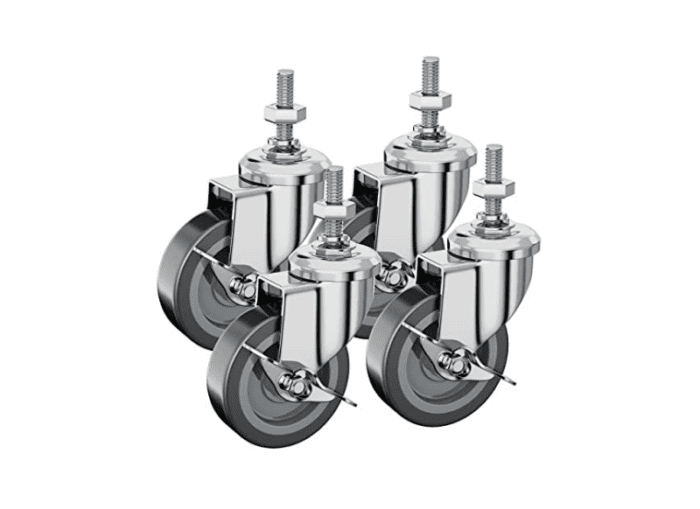
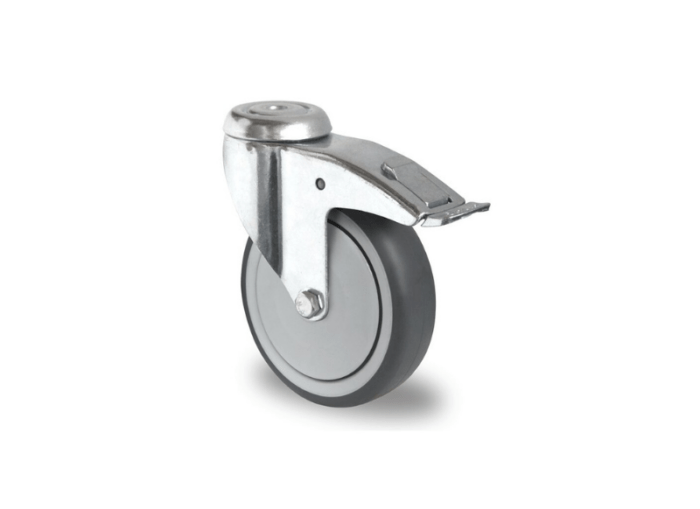
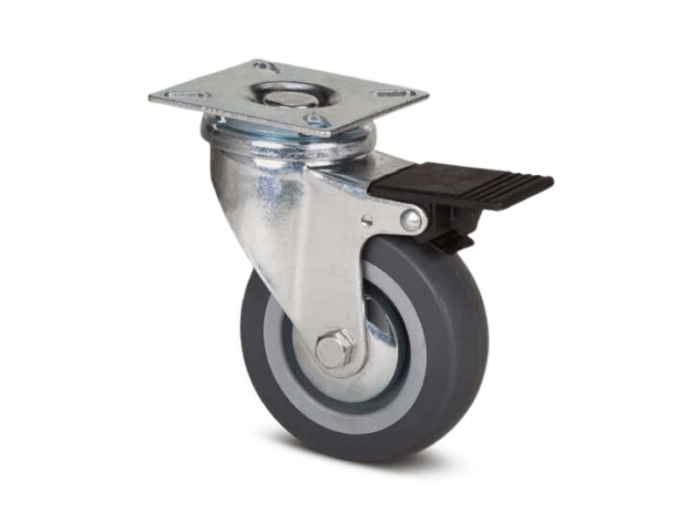
A castor is a complete assembly that includes a wheel and a mounting mechanism. The castor allows a wheel to be attached to a piece of equipment so it can roll.
Castors fall into two main categories:
- Fixed castors – Move forward and backward only
- Swivel castors – Rotate 360° for multidirectional manoeuvrability
Both components work together to determine how a trolley, rack, machine, or piece of equipment handles movement across the workspace.
Why Castors and Wheels Are Essential in Industry
1. Increased Productivity
When employees can move heavy loads quickly and safely, operations run more smoothly. Castors and wheels eliminate the need for manual lifting, reducing time spent on physically demanding tasks.
2. Safer Work Environments
By reducing strain and preventing unnecessary lifting, castors and wheels help minimise workplace injuries. This supports long-term safety compliance and reduces downtime.
3. Improved Workflow
The right mobility solution ensures that equipment, materials, and components can be transported anywhere in the facility without complications.
4. Multi-Industry Applications
Castors and wheels are used across industries, including:
- Warehousing
- Logistics
- Retail
- Manufacturing
- Automotive
- Hospitality
- Food processing
- Heavy industrial workshops
- Healthcare
Every sector benefits from smooth, stable, and reliable mobility.
Types of Castors and Wheels Available in Industrial Settings
Different job environments demand different mobility solutions. Below are the primary types commonly used in industries today.
1. Swivel Castors
Swivel castors rotate a full 360°, making them ideal for environments requiring high manoeuvrability. These castors are used on trolleys, carts, equipment stands, and storage units where staff need the ability to change direction quickly.
Best suited for:
- Warehouses with narrow aisles
- Retail stockrooms
- Workshops requiring frequent repositioning of equipment
- Light- to medium-duty environments
Benefits include:
- Easy navigation
- Tight turning radius
- Smooth directional changes
2. Fixed (Rigid) Castors
Fixed castors do not rotate. They move only forwards and backwards. When used with swivel castors, they provide stability and directional control.
Best suited for:
- Heavy-duty trolleys
- Long-distance movement
- Straight-line transport
- Industrial applications requiring stable motion
Benefits include:
- High load capacity
- Durable construction
- Predictable movement
3. Pneumatic Wheels
Pneumatic wheels are air-filled or foam-filled wheels that provide shock absorption and easy movement over uneven surfaces.
Best suited for:
- Outdoor industrial areas
- Construction sites
- Fields or rough terrain
- Agricultural environments
Benefits include:
- Excellent cushioning
- Smooth movement over bumpy surfaces
- Reduced noise
4. Solid Rubber Wheels
Solid rubber is durable, quiet, and resistant to wear. These wheels are common in indoor environments where smooth flooring is the norm.
Ideal for:
- Warehouses
- Laboratories
- Retail spaces
- Food production
Benefits:
- No punctures
- Low maintenance
- Stable and quiet operation
5. Polyurethane Wheels
Polyurethane wheels are designed for load-bearing strength and long-term durability. They perform well in industrial environments that handle heavy materials.
Excellent for:
- Factories
- Industrial workshops
- High-frequency movement
Benefits:
- High load capacity
- Floor-protective
- Long lifespan
Key Industries That Rely on Castors and Wheels
Warehousing and Distribution
Castors and wheels are essential for transferring boxes, pallets, and inventory with speed and stability. Material handling trolleys, dollies, and mobile racks depend on durable mobility components.
Manufacturing
Production lines require constant movement of parts, tools, and equipment. Castors and wheels help keep assembly lines efficient.
Retail and FMCG
Stock trolleys, display equipment, and storage units rely heavily on mobility solutions.
Automotive Workshops
Mechanics use wheeled equipment stands, toolboxes, engine dollies, and creepers daily.
Hospitality
Hotels and restaurants rely on castors for catering trolleys, housekeeping carts, and furniture mobility.
Healthcare
Hospitals use castors on beds, medical carts, and emergency equipment, requiring smooth and dependable movement.
How to Select the Right Castors and Wheels
Choosing the correct mobility solution involves understanding several factors. The wrong selection can lead to equipment failure, damaged floors, or employee injuries.
1. Load Capacity Requirements
Always check the maximum load the castors and wheels are expected to carry.
Calculate using this formula:
Total Load ÷ Number of Castors = Required Load Capacity per Castor
It is best to add a safety margin of 20–30% for uneven load distribution.
2. Flooring Conditions
Different wheels perform better on different surfaces:
- Smooth concrete floors → Polyurethane or rubber
- Tiles or vinyl → Rubber
- Rough outdoor surfaces → Pneumatic
- Metal grates or industrial floors → Solid rubber or PU
Choosing the correct wheel material prevents premature wear and reduces noise.
3. Mobility Requirements
- Need tight turns? Choose swivel castors.
- Need straight-line control? Combine fixed and swivel castors.
- Need impact protection? Choose pneumatic wheels.
4. Environmental Conditions
Consider exposure to:
- Chemicals
- Oil
- Heat
- Water
- Outdoor elements
Polyurethane and rubber are highly resistant to chemicals. Stainless steel castor housings are ideal for wet or corrosive environments.
5. Durability and Frequency of Use
If the equipment will be used daily or under heavy loads, always select industrial-grade castors and wheels for long-term performance.
Benefits of Choosing High-Quality Castors and Wheels
1. Extended Equipment Lifespan
High-quality components reduce wear and tear on trolleys, machinery, and carts. This means less downtime and fewer replacement costs.
2. Enhanced Worker Safety
Reliable castors reduce the risk of equipment tipping, unexpected rolling, or resistance that can strain workers.
3. Reduced Maintenance Costs
Premium materials require minimal maintenance, saving time and money.
4. Improved Floor Protection
Soft, durable materials prevent scratches, marks, and damage to warehouse or retail flooring.
5. Noise Reduction
High-quality castors and wheels, especially rubber and PU, significantly reduce noise in busy facilities.
Castors and Wheels at West Coast Suppliers
West Coast Suppliers offers an extensive range of castors and wheels designed for durability, industrial performance, and long-term reliability. Whether a business needs pneumatic wheels for outdoor work, swivel castors for mobile equipment, or heavy-duty industrial wheels for warehouse applications, we supply products suitable for every sector.
Our mobility solutions support:
- Warehouses
- Industrial plants
- Logistics companies
- Retail stores
- Workshops and factories
- Hospitality and healthcare
- Construction environments
With decades of experience supplying industrial equipment, West Coast Suppliers ensures that every mobility product meets strict durability and performance standards.
How Castors and Wheels Improve Overall Workflow
Streamlined Material Handling
Employees spend less time carrying heavy loads and more time on productive tasks.
Faster Operations
Movable trolleys and storage units adapt to changing workflow requirements.
Safer Working Conditions
Reducing manual lifting prevents muscle strain and workplace injuries.
Space Optimisation
Mobile equipment is easy to reposition, helping businesses reorganise storage layouts quickly.
Conclusion: The Power of Choosing the Right Castors and Wheels
In any industrial setting, mobility can significantly improve operational efficiency, workflow, and safety. Castors and wheels are small components with a major impact. By choosing the right type, material, and load capacity, businesses can streamline movement, protect workers, and improve overall productivity.
West Coast Suppliers provides durable, reliable castors and wheels suited for a wide range of applications, offering quality solutions that support both daily operations and long-term performance.
Whether a business operates a warehouse, factory, workshop, or retail environment, investing in quality mobility components ensures sustained efficiency and a safer workspace.